
 |
 |
 |
 |
 |
 |
|
THE FULL-BODY STRATEGY FOR CANCER SCANNING
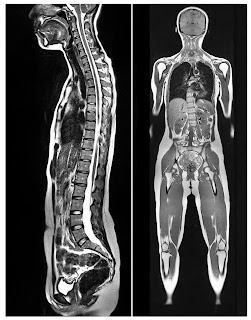
In simplistic terms, having a full-body access comports to the fact that everything is connected in one way or another. Tumor cells start somewhere, but they can spread almost anywhere they want. If we find a cancer in stage one (which usually means confined to the organ of origin) what happens afterwards is to ask if it is IN FACT confined to that organ, or if it has spread somewhere else. This is called staging. After a cancer is detected, patients often go into a panic asking "What stage is it? ... Is it metastatic?" Working with the conventional MRI or CT of the past, they would have to wait to get a brain MRI, then a chest, abdomen, pelvis study and a bone scan etc. With our technology, we already have all that. We've routinely found people with stage one cancer as part of early detection. This is a good basis where you want to find it. From here, searching 'full body' is the best next step to make sure that it's not anywhere else in the body. Using an MRI with diffusion, we can see it all. (See full feature #1) An MRI is known as the most detailed imaging available for scanning a tumor anywhere in the body. Creating a treatment strategy becomes more effective when you know no areas have been overlooked. Patients and physicians both have a higher and more confident level of understanding about what they're dealing with. A great example is confirming that the pounding headache that a patient suffers from after a diagnosis of cancer is stress related, not due the fear of a metastasis...Whole body MRI coverage can preempt this concern.
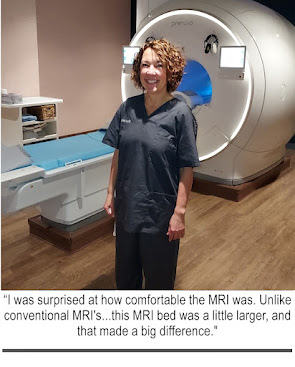
Prenuvo: My Experience with A New Approach to Early Detection Despite the promise of early detection, women have had a long history of underdiagnosis of health issues. Having practiced as a board-certified OB-GYN for 15 years, I know firsthand the importance of early detection for some of the most common women’s health issues, including cancer. After all, basic bloodwork, pap smears, and mammograms are routine parts of women’s health care. However, these only address a small fraction of the diseases and health issues that women can face throughout their lives.
The failure of early detection can be due to many reasons, including a lack of effective screening tests, lack of support for the widespread use of current screening technologies, or lack of access to these services. Some diseases, such as endometriosis, ovarian and pancreatic cancer, and Alzheimer’s disease, have had no effective screening tests and are often not diagnosed until much later in the disease process. Others, such as brain or aortic aneurysms, uterine fibroids, gallstones, and cancers of the bone, liver, or kidney can be detected by currently available imaging, but these are not part of the standard recommendations. (See Dr. Kline's Feature Experience)
|
|
|
|
|
|
|
BARD DIAGNOSTICS at: 212.355.7017