






|
||||||
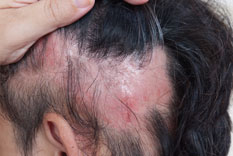
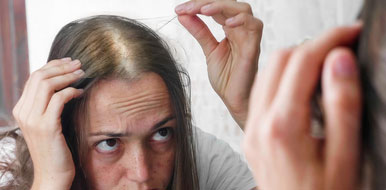
IDENTIFYING THE CAUSE OF YOUR HAIR LOSS When it comes to hair loss, emotions play a significant role in decision making as far as how to address this problem. Before diving into impulsive decisions like expensive products, treatments or procedures, consider a CHECKUP of your health, your scalp and get the proper answers to WHY you are losing your hair.
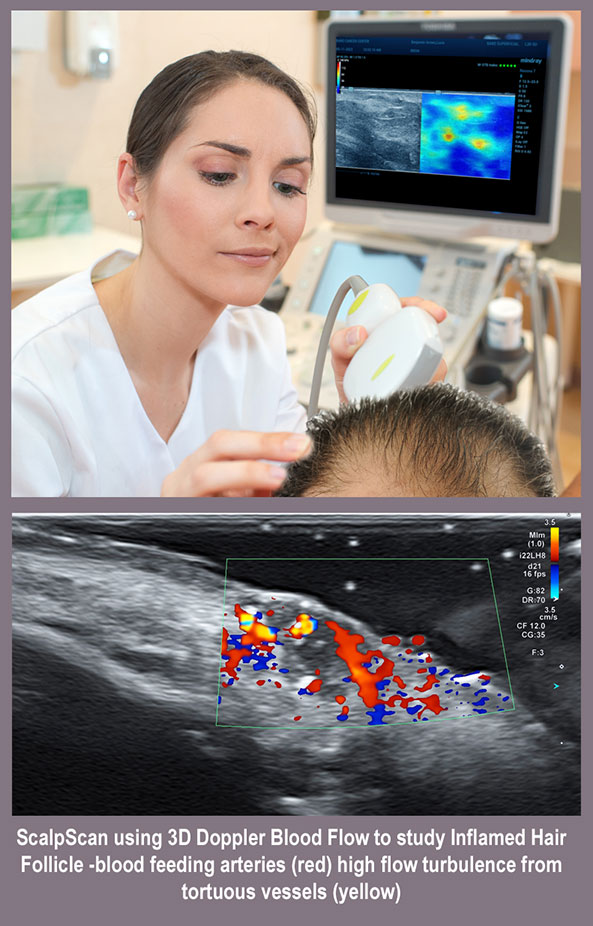
FACT: Hair loss is an indicator of one's health. Often significantly linked to a variety of health disorders, losing one's hair in any noticeable or dramatic way warrants possible medical care. Issues such as nutritional deficiencies (vitamin D, protein) and hormonal imbalances (ie. menopause, pregnancy or thyroid problems) are common reasons for this. Sudden or dramatic loss of hair has also been associated with trauma, high anxiety or recurring stress. Strong medications including chemotherapy drugs are recognized to have tremendous effect on hair loss, as does chronic diseases such as diabetes. SCALPSCAN is our personalized clinical diagnostic program designed to support a comprehensive detection of your personal health- detecting the possible cause for your hair loss. This is a sensible strategy to identifying the underlying reason (and there are many) for hair to fall out or disappear. This includes TESTING, MONITORING AND DIAGNOSTIC STRATEGIES that offer an ideal launch pad to a platform of true wellness and disease prevention. Such a comprehensive checkup that is "FUNCTIONAL" is comprised of a performance-based biological analysis offering a thorough, evidence-based health report starting with the essential roots of any disorder. This means conducting a full multi-modality workup of the patient’s genomic and gene expression report. This comprehensive study of the patient’s symptomatology is also supported by the use of the latest quantitative imaging to form a balanced report about the body's physiology. Together, this multi-modal testing approach supports a fully custom and PERSONALIZED health package.
IT ALL STARTS WITH THE DIAGNOSIS: Our seasoned imaging experts have partnered with hair regenerative specialists to support a fully functioning diagnostic program. Our medical office is fully staffed and equipped to conduct all services comporting to the high standards of Functional Diagnostics & Testing. Combining the leadership of hair transplants and other restorative solutions with clinical pathology, our ScalpScan team works closely to ensuring safety and progressive hair restoration treatments one the functional analysis has been completed. GO HEALTH-SMART WITH FUNCTIONAL SCANNING: There is much criticism in our current standard of care from the the vast majority of patients and recipients of this model. These same consumers have since been educated in what's available as far as intelligent alternative modalities by highly qualified professionals that have delivered a record of wellness success in their respective specialty practices. Our diagnostic team partners with hair technicians, surgical specialists, dermatologists and clinical aestheticians to provide this clinical service upgrade to their private practice. We advocate the use of safe (non-radiation) non-invasive biometric technologies and recognized medical imaging that’s compatible with all current clinical reporting standards. Our diagnostic experts are recognized “disease detectives” who work directly with each patient, offering a complete and dedicated pathological analysis in real time.
LAND MINES: "DO NOT PROCEED WITH TREATMENT" Our diagnostic team partners with hair technicians, surgical specialists, dermatologists and clinical aestheticians to provide this clinical service upgrade to their private practice. We advocate the use of safe (non-radiation) non-invasive biometric technologies and recognized medical imaging that’s compatible with all current clinical reporting standards. Our diagnostic experts are recognized “disease detectives” who work directly with each patient, offering a complete and dedicated pathological analysis in real time.
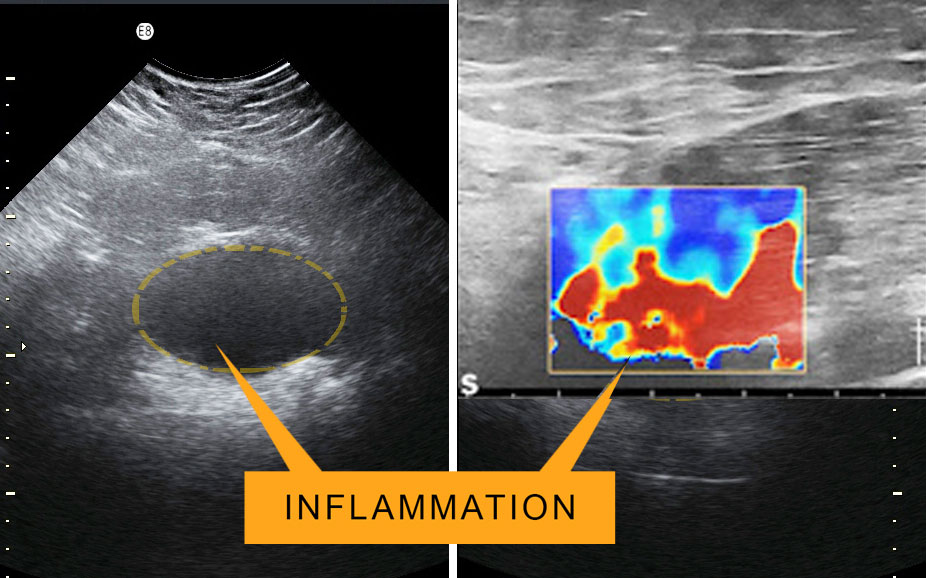
TRAUMA & TOXINS (and Non-Invasive Treatments) - Written By: Robert Bard MD TRAUMA: Soft tissue trauma causes a black and blue area but subcutaneous pathology is best imaged by ultrasound FIG 2 The normal dermal layer is light gray on scans while inflammation is dark gray and fluid (blood) is black. Dermal ultrasound has been used for 30+ years to find skin cancer and guide scar treatment so the use in subacute trauma victims is a logical progression of this portable and non invasive technology. Foreign bodies such as glass and splinters are easily visible as bright white areas so the surgeon is directed to the exact removal site under ultrasound guidance with minimal tissue “exploration” Fillers have characteristic echo pattern where HA products appear as black globules when they coalesce. Often the HA injected aliquot disperses immediately leaving a diffuse hazy picture. Complications of fillers are well described in recent textbooks. A special case is free silicone having specific “snowstorm” pattern that is commonly seen in breast imaging of ruptured implants. The theoretical possibility of immune system compromise by free silicone is still being studied. FIBROTIC SCARRING: Elastography shows scar tissue quantitatively in the liver parenchyma but also in traumatized skin, muscles and tendons. The “elastic” properties of tissue are used worldwide for cancer diagnostics because malignant tumors are rock hard and “gritty” has we feel with the needle biopsy while benign lumps are soft. Ultrasound maps tissue signatures to that free silicone has a MG value 35-40.
Tech Process tour of Hair Transplant - By Diane Pinson
To conduct this medical validation officially can be offered through various protocols, an Institutional Review Board approved by the HHS and FDA regulations. One protocol that can be available for consideration by the IRB panel is the use of medical grade 3D Doppler Ultrasound imaging. The use of medical imaging technologies like an ultrasound alongside the interpretation of a certified clinical radiologist may offer biometric assessment and analyses of all scanned readings and the collection of ample data to confirm or validate a health device’s effects on the body as marketed. SUPPORTING PATIENT SAFETY AND CLAIMS |
||||||

 VALIDATION / EFFICACY RESEARCH: BardDiagnostics is partnered with the IHRC (Integrative Health Research Center) in NYC and is dedicated to exploratory performance testing of technologies, serums and clinical solutions. The concept behind ‘CLINICAL VALIDATION’ in performance testing helps underscore the safety and performance of a certain health product (in question) “ensuring the manufacturer will consistently provide the intended benefits for its use condition. Clinical validation is usually done through a series of tests and inspections.”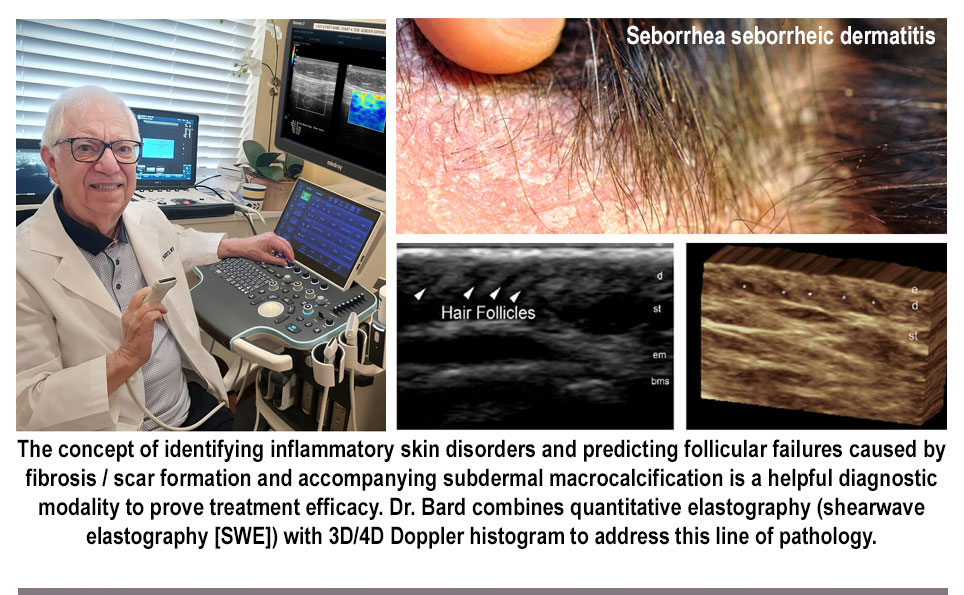
|
BARD DIAGNOSTICS at: 212.355.7017