
 |
 |
 |
 |
 |
 |
MEDICAL GRADE THERMOLOGY
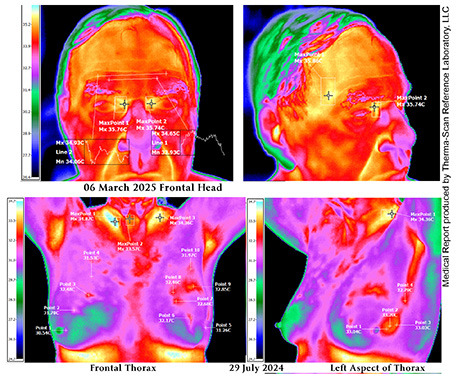
The science of MEDICAL THERMOGRAPHIC IMAGING has been significantly advanced through the integration of diagnostic infrared imaging technology and our partnership.with Therma-Scan™ Laboratory. With their award-winning scientific leadership that comports the scanned imaging output into quantitative medical reporting and lifesaving thermology solutions. Thermology, also known as medical infrared imaging or digital infrared thermal imaging (DITI), is a non-invasive diagnostic tool that detects and measures subtle variations in skin surface temperature. This temperature data, which reflects the physiological activity of the body, is captured using highly sensitive infrared cameras. Unlike traditional imaging that focuses on structural abnormalities, thermology highlights functional changes, making it a valuable tool in the early detection and screening of conditions before they become anatomically evident. By analyzing thermal patterns and asymmetries across the body, clinicians can identify areas of inflammation, circulatory compromise, or nerve dysfunction with remarkable precision. Although not yet widely adopted as a standalone diagnostic method in mainstream medicine, thermology has gained increasing approval as an adjunctive tool in various specialties, including oncology, neurology, rheumatology, and pain management.
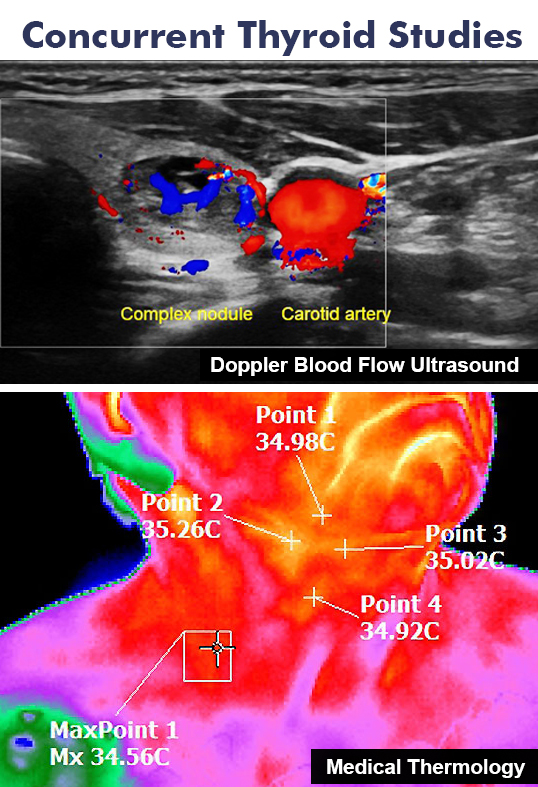
Thermographic imaging excels in identifying inflammatory processes by detecting hyperthermia associated with increased blood flow and metabolic activity. This is particularly valuable in screening for soft-tissue injuries, autoimmune conditions like rheumatoid arthritis, and neuropathic disorders, including complex regional pain syndrome (CRPS) and diabetic neuropathy. It is also effective in assessing musculoskeletal dysfunctions, including early-stage arthritis, by visualizing joint inflammation and temperature disparities. Thermology converts these temperature measurements into quantitative data that can be processed for clinical interpretation, often using pattern recognition algorithms and comparative mapping to track disease progression or response to treatment. As a radiation-free and contactless modality, thermology offers a safe, repeatable, and patient-friendly option for continuous monitoring of chronic conditions, enabling early intervention and improved clinical outcomes. Employing state-of-the-art processing technology, our partners at Therma-Scan Labs work closely with our technicians to gather the most compelling data from each bioscan as part of quantitative analysis to screen and accurately report on pathologies- which can also be applied in early detection. Most commonly applied for the earliest indication of breast cancer, Thermology is also recognized for its utility in the detection and screening of: - carotid and thyroid disorders Through BardDiagnostics' thermology lab, we are able to support partnering physicians and current patients address a wide variety of health concerns. (See full feature #1)
|
||
|
THE FULL-BODY STRATEGY FOR CANCER SCANNING
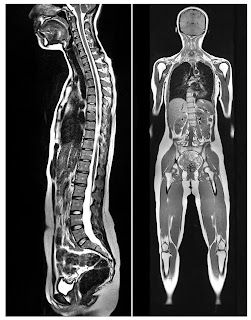
In simplistic terms, having a full-body access comports to the fact that everything is connected in one way or another. Tumor cells start somewhere, but they can spread almost anywhere they want. If we find a cancer in stage one (which usually means confined to the organ of origin) what happens afterwards is to ask if it is IN FACT confined to that organ, or if it has spread somewhere else. This is called staging. After a cancer is detected, patients often go into a panic asking "What stage is it? ... Is it metastatic?" Working with the conventional MRI or CT of the past, they would have to wait to get a brain MRI, then a chest, abdomen, pelvis study and a bone scan etc. With our technology, we already have all that. We've routinely found people with stage one cancer as part of early detection. This is a good basis where you want to find it. From here, searching 'full body' is the best next step to make sure that it's not anywhere else in the body. Using an MRI with diffusion, we can see it all. (See full feature #1) An MRI is known as the most detailed imaging available for scanning a tumor anywhere in the body. Creating a treatment strategy becomes more effective when you know no areas have been overlooked. Patients and physicians both have a higher and more confident level of understanding about what they're dealing with. A great example is confirming that the pounding headache that a patient suffers from after a diagnosis of cancer is stress related, not due the fear of a metastasis...Whole body MRI coverage can preempt this concern.
|
|
|
|
|
|
|
BARD DIAGNOSTICS at: 212.355.7017